News

MS509 or MS609 — Which Plane Lock Is Right for Your Cabinet Door?

2026-06-08 0 Leave me a message

A protruding handle isn't always practical on a cabinet door — sometimes flush is just cleaner, both functionally and visually. That's where plane locks come in. Yitailock produces two plane lock models that cover most of the common applications in this category: the MS509 push-button latch and the MS609 lever push-to-release latch. Here's how they differ and when to use each one.

MS509 — Push-Button Flat Latch for Standard Enclosures

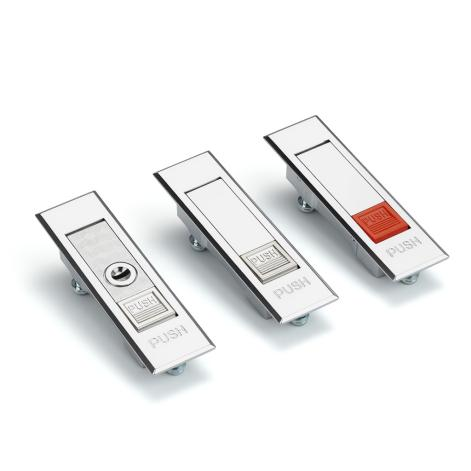
The MS509 is a straightforward push-button plane lock designed for distribution box doors, switchgear, electrical enclosures, and fire doors. Press the button and the latch releases; let go and it re-engages. No handle to lift or rotate — just a single push to open.

Three versions are available:


MS509-2 Unlocked Red — the red button makes the lock visually distinct, which is useful on fire cabinet doors or any enclosure where quick visual identification of the release point matters

MS509-2 Unlocked White — the standard keyless version for general enclosure use

MS509-1 Locked White — includes a lock cylinder for keyed access control


All three come with a flat latch plate. The MS509 suits applications where simplicity and speed of access are the priority and the door doesn't require adjustment for different panel thicknesses.


MS609 — Lever Push-to-Release Latch with Adjustable Tongue Length

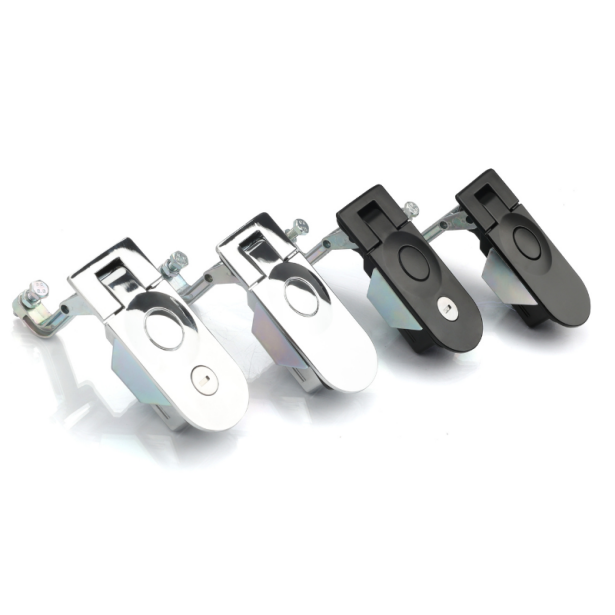
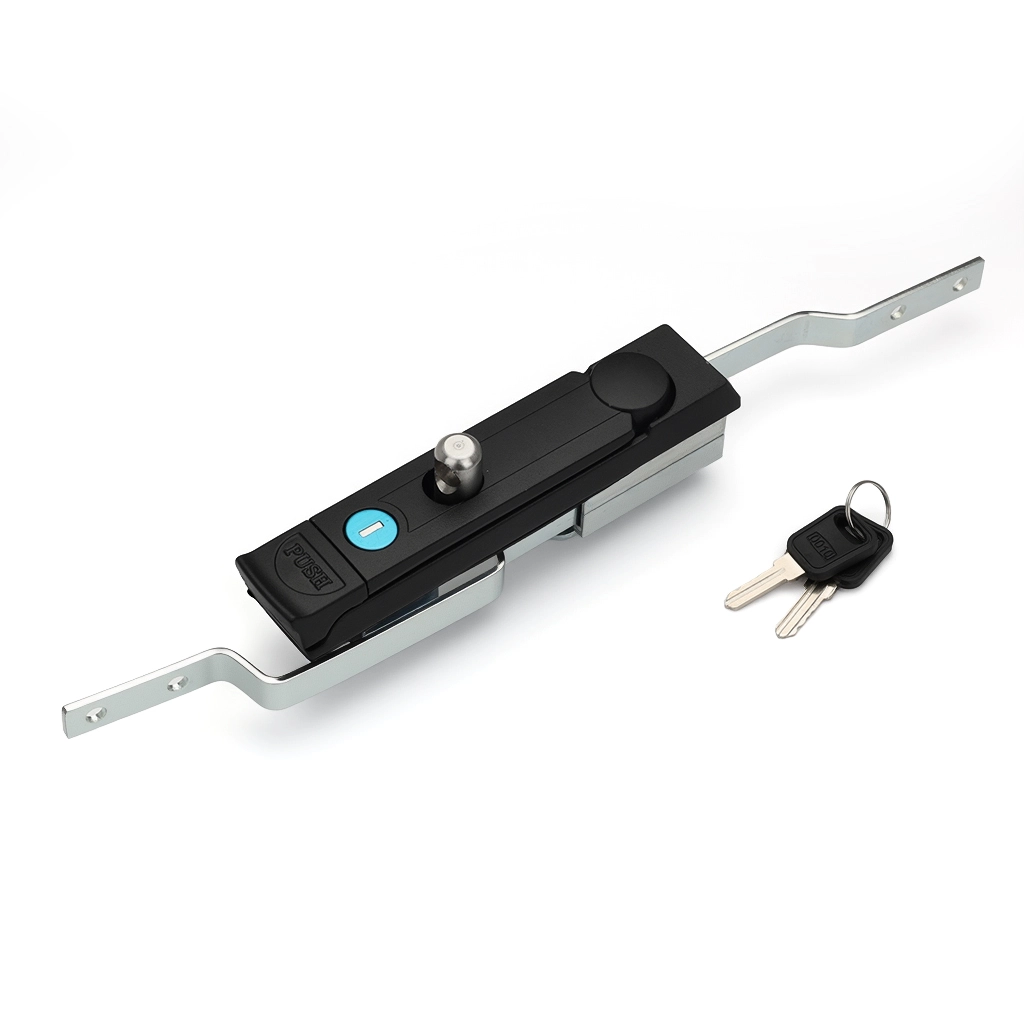
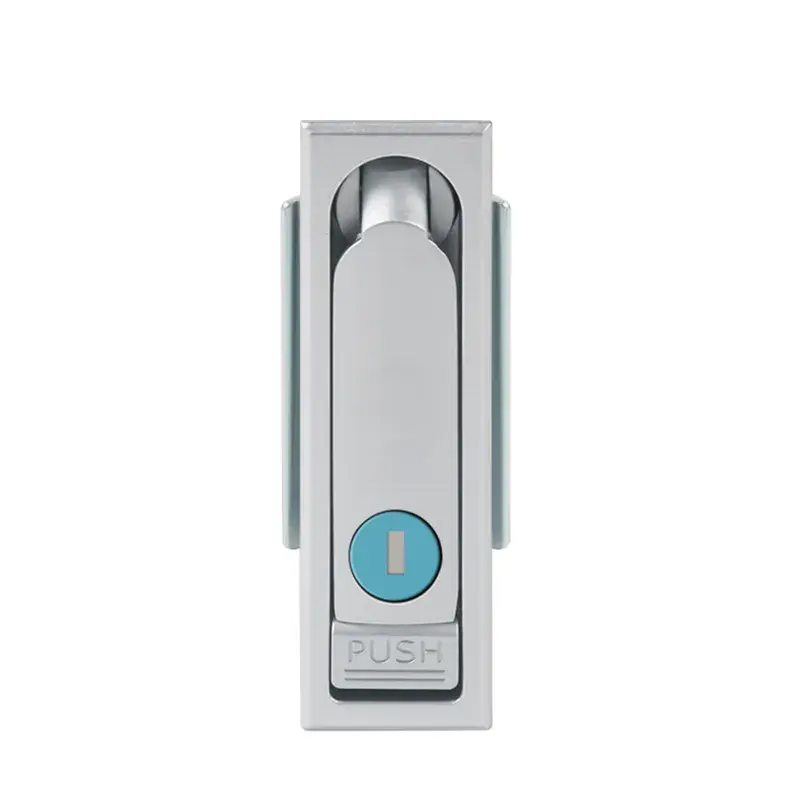
The MS609 is a more versatile flat lock designed for industrial equipment enclosures, distribution boxes, switchgear, RVs, and communication cabinet doors. The lever sits flush against the lock body; press it to release the latch and the door swings open. The key difference from the MS509 is the adjustable tongue length — the E dimension — which determines how far the locking tongue extends into the door frame.

Four E values are available: 29mm, 44mm, 60mm, and 72mm. As shown in the third image, E is measured from the back of the lock body to the tip of the locking tongue when engaged. Choosing the right E value depends on the door frame depth and how much tongue engagement is needed for a secure hold. Deeper frames or heavier doors generally benefit from a longer E value for a more reliable latch.

Finish options are matte black and bright chrome, and both are available with or without a lock cylinder — giving sixteen combinations in total across the two finishes and four tongue lengths. The lock cylinder versions add keyed access control for enclosures in restricted or public-facing locations.

Which One to Choose

The MS509 is the simpler, more compact option — well suited to standard indoor enclosures where the door thickness is fixed and quick keyless access is all that's needed. The red button version has a clear role on fire cabinets and emergency access panels.

The MS609 is the better choice when the installation involves varying panel or frame depths, when finish appearance matters, or when the same plane lock model needs to work across a range of cabinet types with different tongue engagement requirements. The adjustable E dimension is what makes it flexible enough to cover that range without needing a different lock for each application.

Related News
Leave me a message
X
We use cookies to offer you a better browsing experience, analyze site traffic and personalize content. By using this site, you agree to our use of cookies. Privacy Policy
Reject Accept