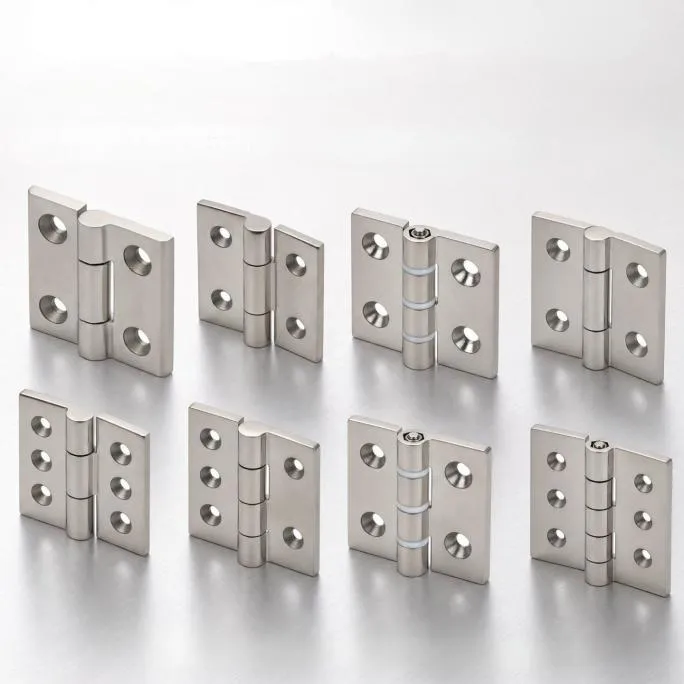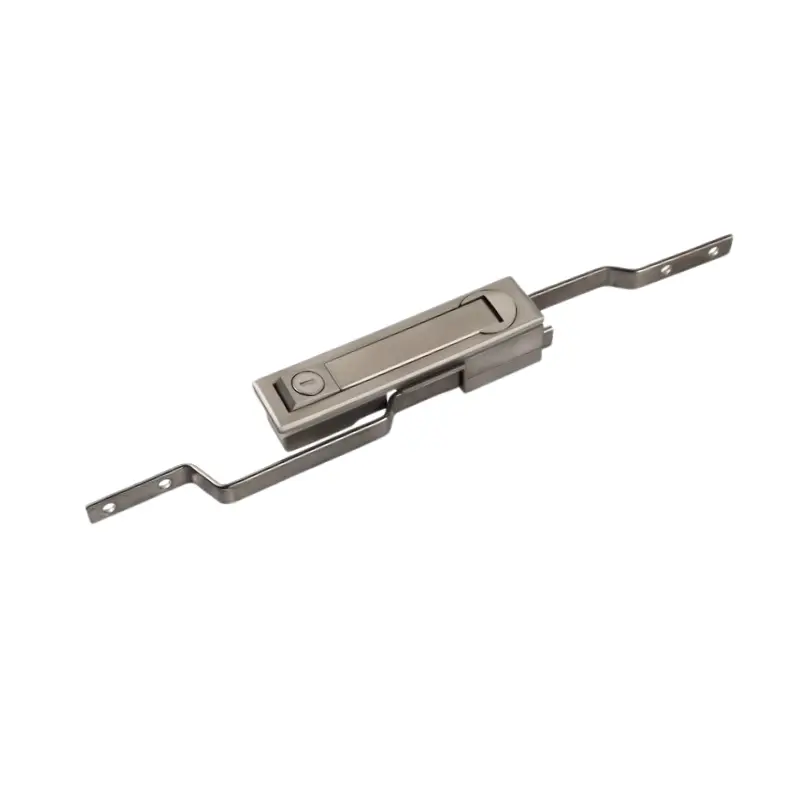
Cabinet hinge installation looks straightforward on paper—weld it on or screw it down and you're done. In practice, a few small oversights during installation tend to cause problems that are annoying to fix after the fact. At Yitai Lock, we hear about most of these issues after they've already happened on the production floor. Here's what's worth checking before the hinge goes on.
The most common mismatch is using a hinge that's too light for the door. Heavier cabinet doors—particularly on larger distribution panels or enclosures with thick steel construction—need a hinge with enough load capacity to hold the door flat without sagging over time. Yitai Lock's range covers multiple hinge sizes and body thicknesses for this reason—a door that droops even slightly will eventually cause sealing problems and put uneven stress on the lock mechanism. Check the door weight against the hinge spec before committing.
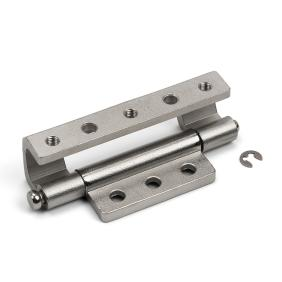
For screw-mounted Yitai Lock hinges with countersunk holes, screw length is worth calculating rather than guessing. Too short and the hinge won't hold firmly; too long and the screw can break through the back of a thin panel or interfere with internal components. The right length depends on door panel thickness plus hinge leaf thickness, minus a small margin so the screw tip doesn't protrude.
On welded Yitai Lock hinges, alignment before the weld is the critical step—once it's welded, adjusting it is a significant rework. The door should be held in its final closed position while the hinge is tacked in place, checked for level and clearance on all sides, and then fully welded. Rushing this step is where most installation problems come from.
It sounds obvious, but it's easy to overlook in a dense installation—the door needs physical space to complete its full opening swing without hitting adjacent cabinets, walls, or equipment. This matters more on Yitai Lock hinges with wide opening angles, such as the 270° RMU hinge. Check the clearance with the door mocked up before finalizing the cabinet position.
On taller cabinet doors, using two Yitai Lock hinges rather than one isn't just about load—it also prevents the door from flexing or twisting along its height under its own weight. Space the hinges evenly along the door height, typically with one in the upper third and one in the lower third, rather than placing both near the center.
Getting these details right before installation takes a few extra minutes but avoids the kind of rework that costs considerably more time once the cabinet is assembled. If you're unsure which hinge suits your door weight or frame type, Yitai Lock's product range covers a wide variety of cabinet hinge configurations—welded and screw-mounted, concealed and surface-mounted, in carbon steel and stainless steel—and the team can help narrow down the right spec for your application.