News

Which Toggle Latch Is Right for Your Application — and How Do You Choose Between Eight Models?

2026-06-12 0 Leave me a message

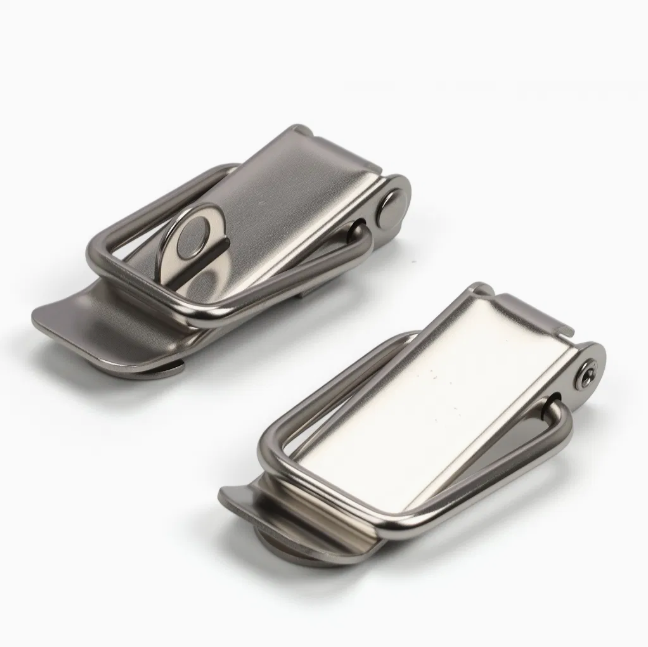
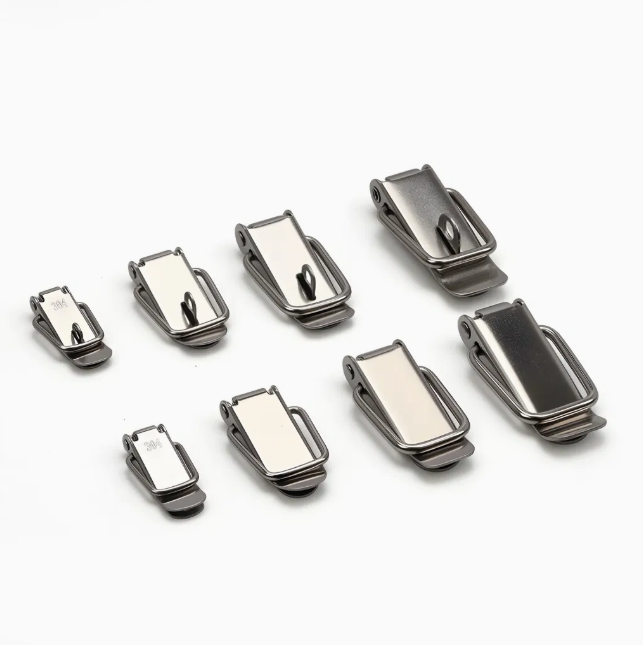
Toggle latches look simple, but there's more variation across the range than most people expect. Yitailock produces eight buckle latch lock models in this series — the J100 range — covering everything from compact enclosure clasps to heavy-duty industrial fasteners. Each model is available in nickel-plated iron, 201 stainless steel, and 304 stainless steel, and three models include a padlock hole for added security. Here's how to navigate the range.


What These Latches Are Used For

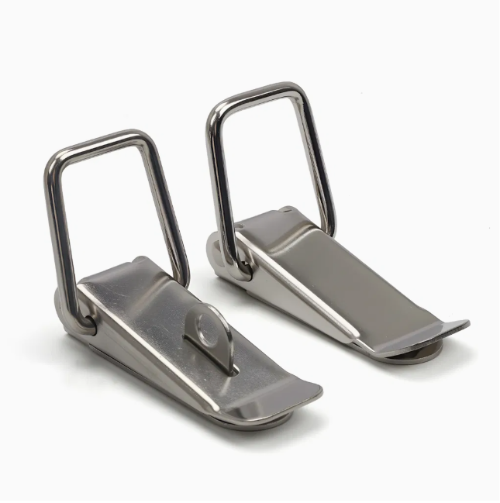
Toggle latches in this style are a common choice for cases, toolboxes, equipment enclosures, junction boxes, and industrial cabinet doors where a fast, tool-free closure is needed. The spring-loaded loop hooks over a keeper and snaps into place — open by lifting the lever, close by pressing it back down. It's a straightforward mechanism that holds reliably under vibration and repeated use, which is why it shows up across so many different applications.

/latch-lock

The Eight Models and Their Dimensions

The range runs from compact to heavy-duty, with each model sized for different door weights and frame configurations:

J105 — 75.6×26.7mm body, keeper height 59mm, 4×M4 mounting holes

J106 — 75×27mm body, keeper height 59mm, 4×M4 mounting holes

J103 — 90.6×31.5mm body, keeper height 75.5mm, 5×M4 mounting holes

J104 — 90.6×31.6mm body, keeper height 75.8mm, 5×M4 mounting holes (padlock hole included)

J101 — 111×39mm body, keeper height 89.7mm, 4×M5 mounting holes

J102 — 130×37.8mm body, keeper height 105.5mm, 4×M5 mounting holes (padlock hole included)

J001 — 126.5×39mm body, keeper height 105mm, 4×M5 mounting holes (padlock hole included)

The smaller models — J105 and J106 — suit lighter panels and compact enclosures. The mid-range J103 and J104 cover most standard industrial cabinet applications. The larger J101, J102, and J001 are built for heavier doors or cases where more clamping force and a larger keeper engagement are needed.

/latch-lock

Padlock Hole Models

The J104, J102, and J001 include a padlock hole in the latch body. This allows a padlock to be passed through the loop when the latch is closed, preventing it from being opened without the key. This is useful for outdoor enclosures, site boxes, or any application where the latch lock needs to double as an access control point rather than just a closure mechanism.


Material Selection

All eight models come in three material options:

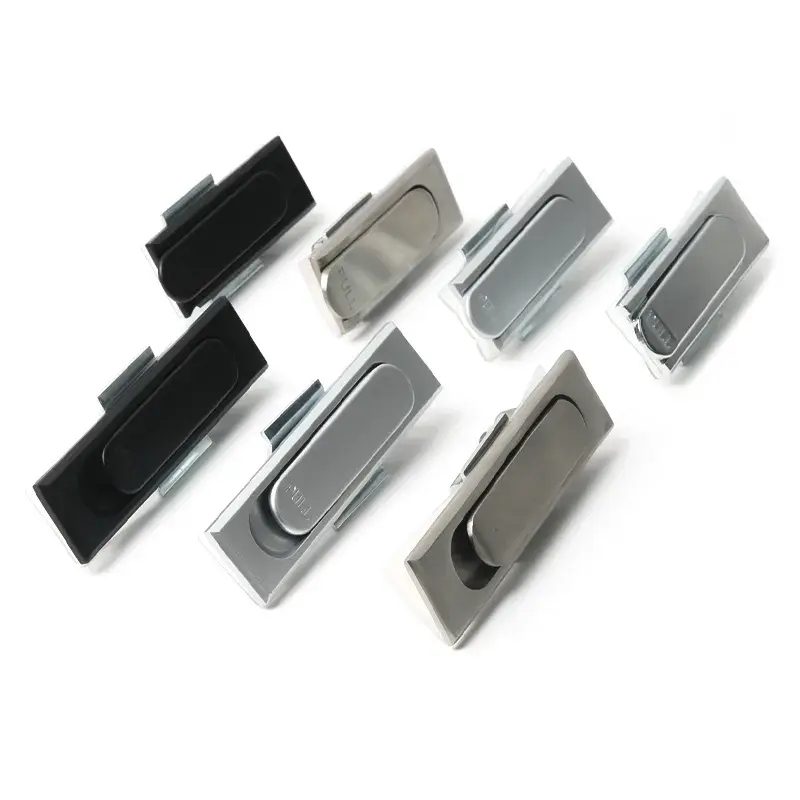
Nickel-plated iron is the cost-effective choice for indoor applications in dry, stable environments. The nickel plating provides basic corrosion resistance, but it's not suited to prolonged moisture exposure.

201 stainless steel sits between the two — better corrosion resistance than nickel-plated iron, without the price tag of 304. It works well for enclosures in mildly humid or semi-outdoor settings where full marine-grade protection isn't necessary.

304 stainless steel is the most durable option, suited to outdoor installations, coastal environments, or anywhere that sees regular moisture, cleaning chemicals, or salt spray. For industrial latch locks that need to hold up over years of outdoor use, 304 is the straightforward choice.

/latch-lock

Choosing the Right Model

Start with the door or panel weight and work out which body size provides enough clamping force. Match the mounting hole pattern — M4 for the smaller models, M5 for the larger — to the panel material and thickness. Add a padlock hole model if access control is needed. Then choose the material based on the installation environment. Those four decisions cover most of what's needed to get the right buckle latch lock from this range without overspecifying or underspecifying for the application.

Related News
Leave me a message
X
We use cookies to offer you a better browsing experience, analyze site traffic and personalize content. By using this site, you agree to our use of cookies.Privacy Policy
RejectAccept